Mélanzé
The place
Where everything takes root
A base for living, working and hosting in Thiafoura, where hospitality, creation and regeneration move together.
Anchor
Thiafoura, Petite-Côte, Senegal
Material
Adobe, recycled wood, thatch, red soil
Life
Hospitality, studio, retreats and daily life
The question everyone asks
Why the Petite-Côte, Senegal
The question comes back often. Why settle here on the Petite-Côte rather than in a big city?
Because between Somone and Joal, landscapes, livelihoods and rhythms are constantly crossing. Small-scale fishing, family farming, circulation, tourism, local know-how and a very lively younger generation all meet here. It is a porous, changing, living territory.
And because Joan and Jacqueline, after twenty years of nomadic life across Asia, Africa and the Caribbean, chose this place to put down roots - with their four children, their books, their mobile studio and their dreams.
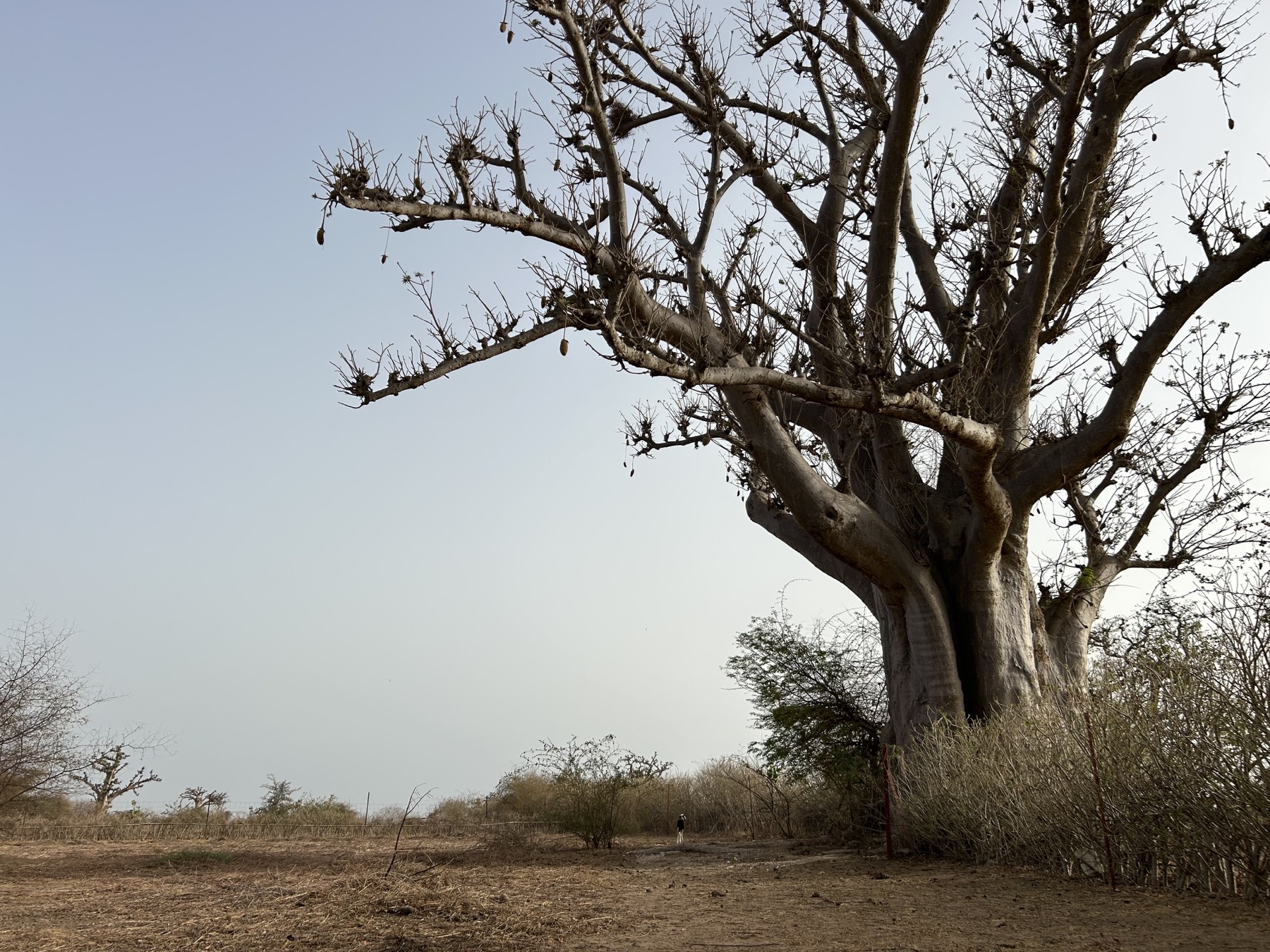
The land
One hectare under the baobabs
Mélanzé sits on one hectare of land in Thiafoura, a village near Somone. Red laterite soil, centuries-old baobabs, silk-cotton trees and palm trees tracing the horizon.
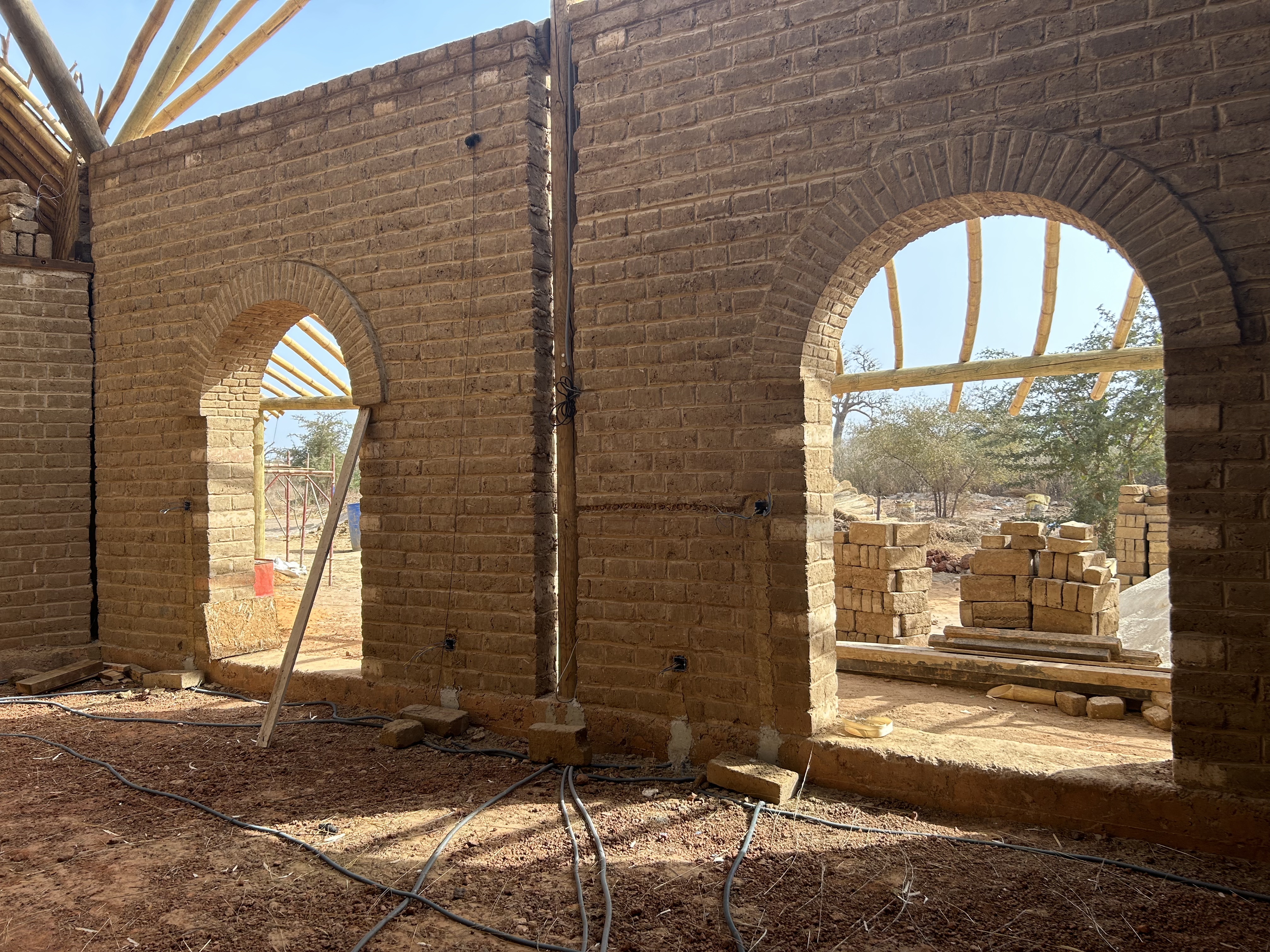
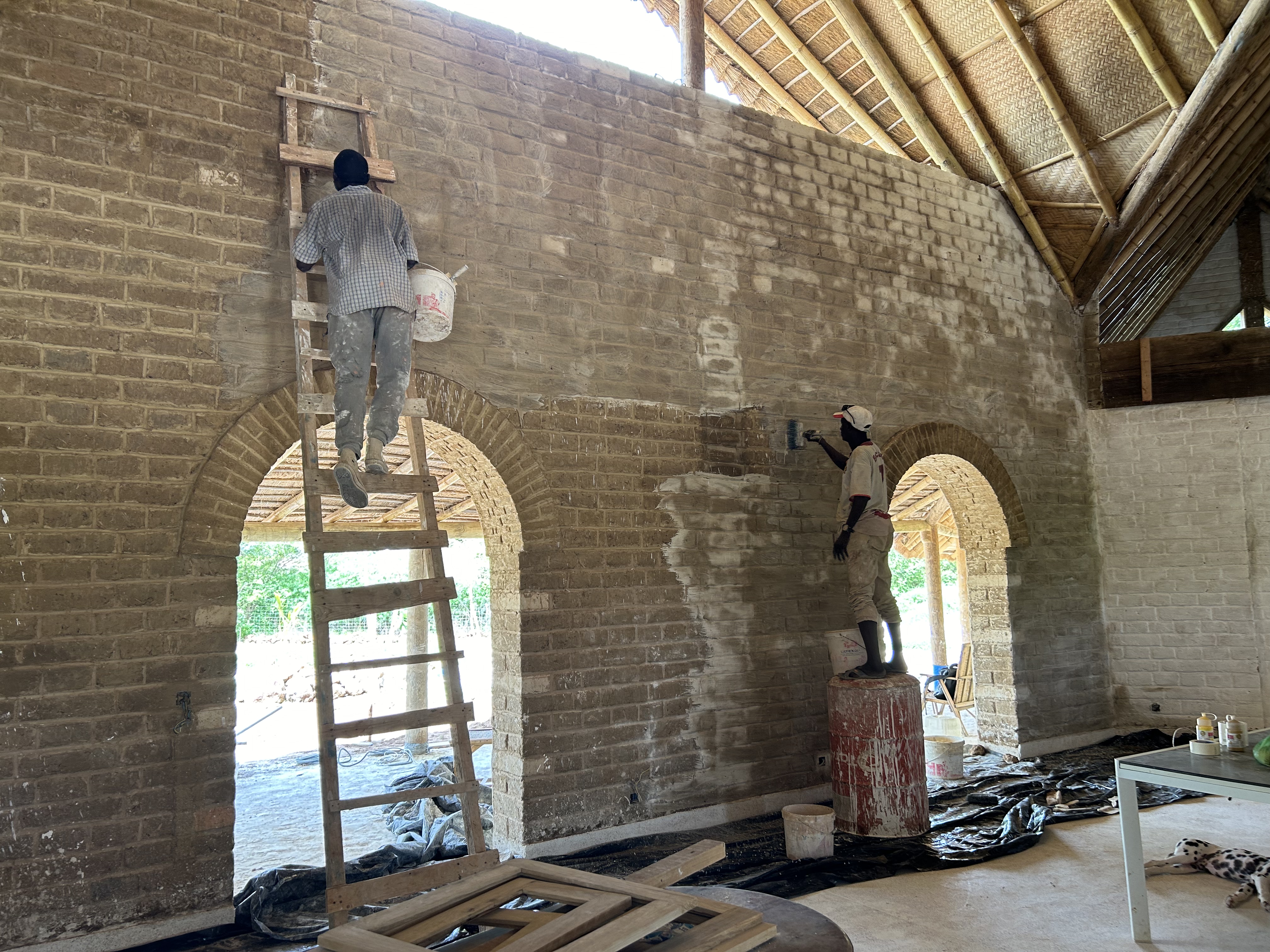
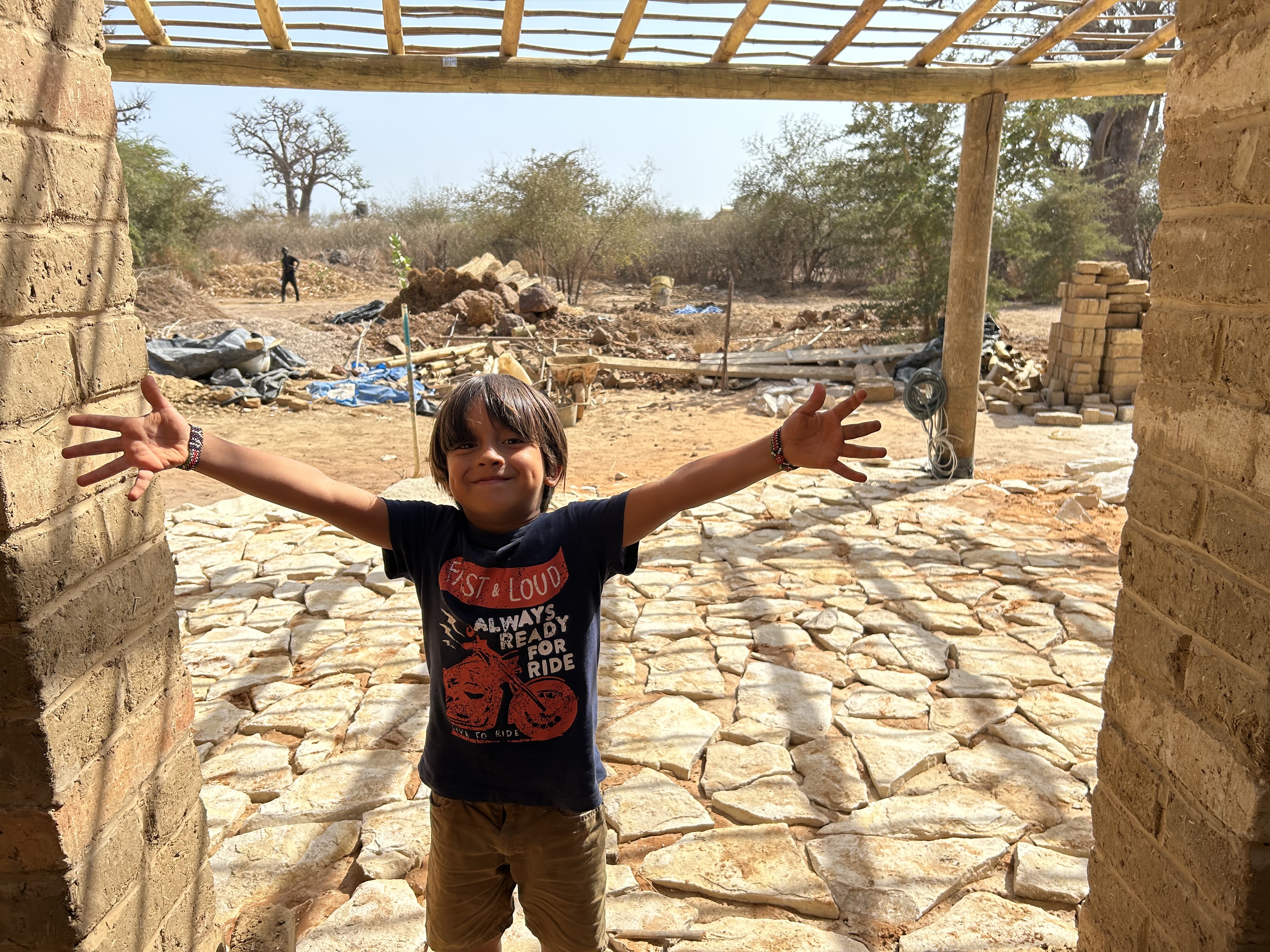
300 m² of sustainably built spaces have already gone up: adobe walls (raw earth bricks), recycled wood frames, thatched roofs. Each building was designed with local craftspeople, respecting Senegalese know-how.
Completely off-grid for energy and water - borehole, rainwater harvesting, ecological sanitation. Nothing is connected to the mains. Everything runs on sunshine, rain and common sense.
The build
Building with the earth

Daily rhythm
Daily life
Here, we wake up to the muezzin's call and birdsong. We write in the morning, build in the afternoon, record in the evening. Village children stop by, craftspeople come to work, visitors settle under the great baobab.
The place hosts the activities of our Publishing House, the recording sessions of the Som'One Music label, and the community projects we run with local and international partners.
It is a place for work, creation and hospitality. A real, imperfect, living place, built day after day.
Regeneration
When we arrived, the land carried the marks of long exhaustion: peanut monoculture, trees cut for charcoal, soils weakened by wind and lack of shade. It is a familiar story in this part of Senegal.
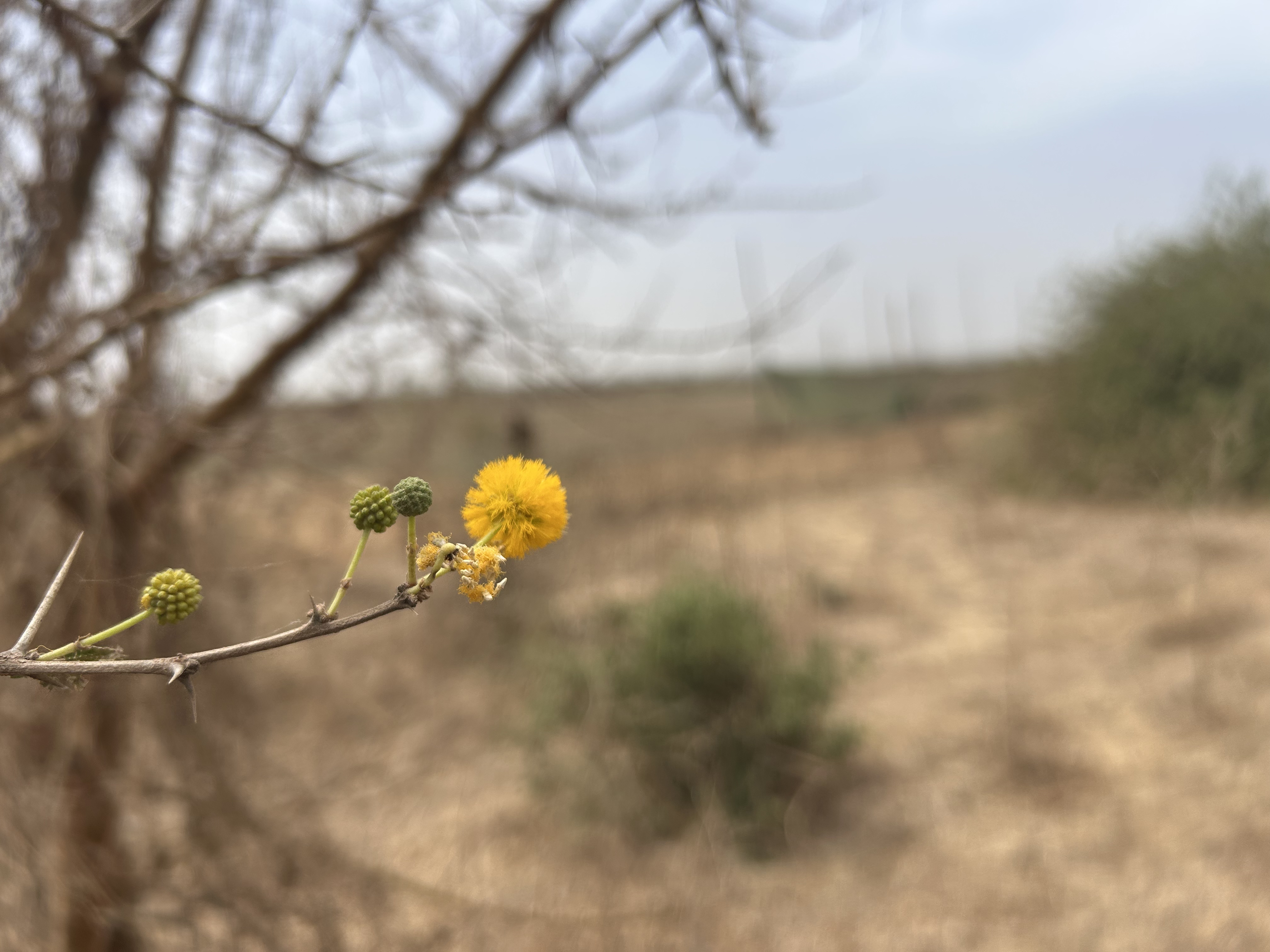
Since then, we have been planting again. Fruit trees - mango, soursop, lemon. Trees for timber. Living hedgerows to hold the soil and bring back more life. Little by little, birds return, shade spreads and the ground becomes supple again.
Culture follows the same rhythm here: a book, a record, a workshop or a residency can begin modestly, then grow into its place over time. What matters is continuity, care and the quality of relationships.
Over time, Mélanzé hopes to remain a source-place: somewhere that can inspire other ways of dwelling, creating and caring, without losing its local roots.
Hospitality & retreats
Yoga & wellness retreats
Jacqueline Ahmed, co-founder of Mélanzé and certified yoga instructor, organizes yoga and wellness retreats at the eco-centre. A unique setting - between baobabs and adobe, in the heart of Senegalese nature - to reconnect with yourself and with the living world.
The retreats combine daily yoga practice, meditation, healthy eating and immersion in local life. They are open to all levels, from beginners to experienced practitioners.
A pause from the noise of the world. To breathe, feel the earth beneath your feet, and leave regenerated.
Take part in Mélanzé
The place already exists. You can help open it wider, strengthen it and support what comes next.
Contribute